Extend the useful life of your software, improve maintainability, and introduce new capabilities through controlled engineering changes. MayilVeera helps modernize applications while preserving the workflows and integrations your operations depend on.
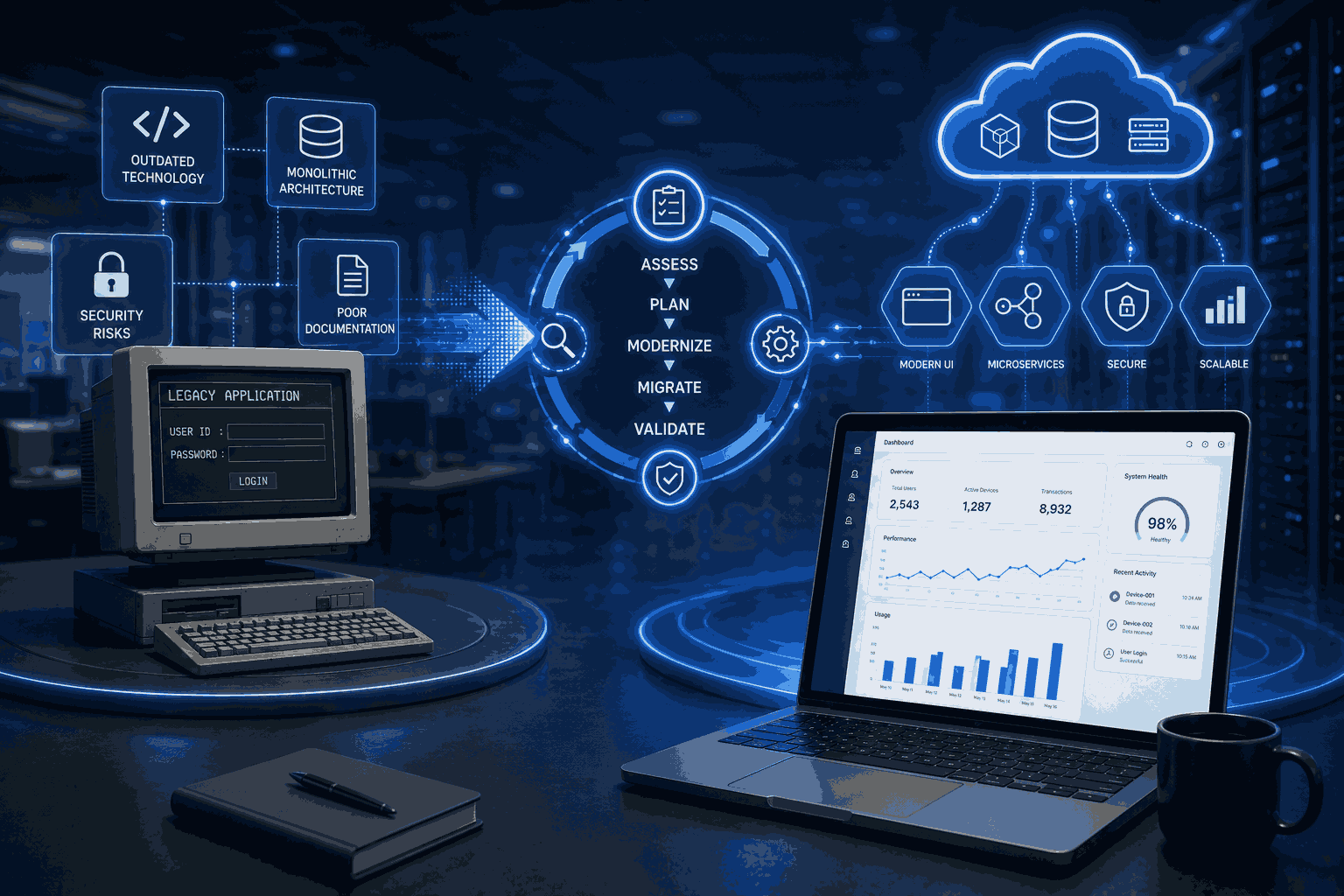
Existing applications often contain years of valuable business rules and equipment knowledge. At the same time, outdated frameworks, unsupported components, difficult interfaces, and limited documentation can make them harder to maintain.
MayilVeera assesses the application before recommending a path forward. The right approach may be a focused upgrade, a new interface, improved integration, partial refactoring, or a broader redevelopment. We define the intended benefits, affected dependencies, validation requirements, and transition plan before implementation begins.
Practical application modernization focused on maintainability, integration, controlled change, and operational continuity.
Review architecture, source availability, operating environments, interfaces, database dependencies, and known support risks.
Update selected components and improve code organisation, testability, and maintainability.
Simplify workflows and introduce responsive interfaces while retaining necessary operational functions.
Connect existing applications with newer software, devices, and services through documented interfaces.
Plan database changes and movement between deployment environments with validation, backup, and recovery arrangements.
Compare old and new behaviour, document changes, and provide the information needed for ongoing support.
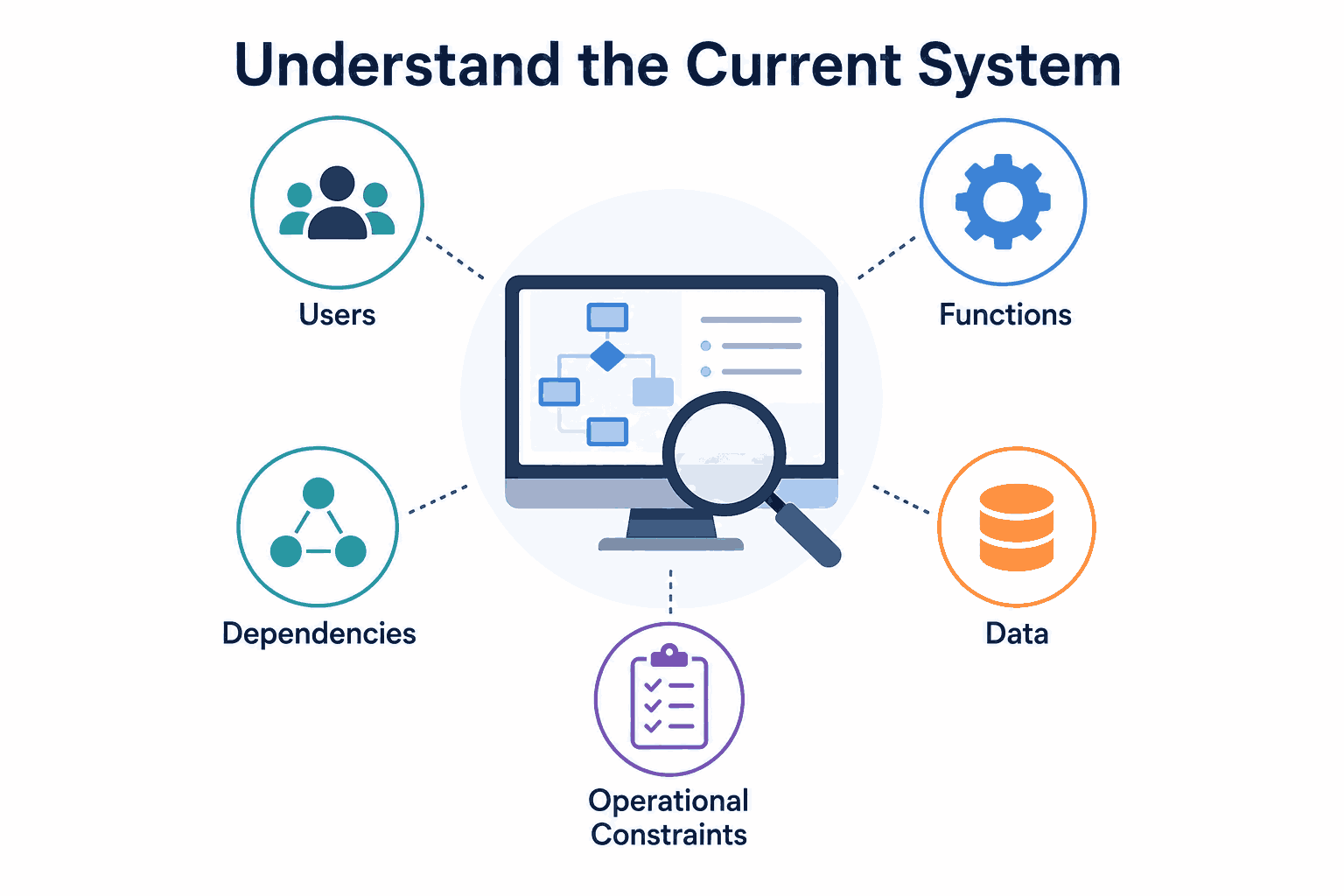
Application modernization works best when the existing system is understood before changes are introduced. We use a controlled route that reduces unnecessary disruption and keeps operational requirements visible throughout the work.
Document users, functions, dependencies, data, and operational constraints.
Prioritise changes according to business value, technical risk, and available resources.
Validate individual changes and maintain compatibility where required.
Test representative workflows, reconcile migrated data, and agree the deployment and rollback process.
Improve the technology without losing the workflows, integrations, and operational knowledge that already work.
Protect valuable business rules and equipment knowledge while improving the technology around them.
Introduce changes in manageable stages and maintain compatibility where operational continuity requires it.
Address outdated components, difficult interfaces, technical dependencies, and limited documentation.
Connect existing applications with newer software, devices, services, and documented APIs.
Modernization can support local, on-premise, or other deployment approaches based on operational needs.
Verify representative workflows, migrated data, deployment arrangements, and rollback procedures.
No. A targeted upgrade or partial redevelopment may meet the requirement with less disruption.
Yes. Modernization does not automatically mean cloud migration. The deployment model should suit your operational needs.
We can begin with an assessment. Source-code availability, licensing, system access, and the ability to test existing behaviour determine the feasible scope.
Tell us what the application does, which technologies it uses, and the problems you want to address.
Plan Your ModernizationVisit or contact our Chennai team for industrial automation, embedded systems, product engineering, IIoT, and connected-device discussions.
